Disclosure: At Honestly Tennis, we independently test gear. As an Amazon Associate, we earn from qualifying purchases at no extra cost to you.
You know the guy. Shows up to the Tuesday night clinic in barely-there running shoes, thinks he is going to glide around the baseline like Federer. Two lateral sprints later, his ankle folds like a cheap lawn chair, and his outsole is already peeling off. Hard courts do not forgive that nonsense.
This surface is basically 60-grit sandpaper poured over concrete, and it eats cheap rubber for breakfast. I have watched more club players roll an ankle in running shoes than I have seen double faults on a windy day. If you are serious about moving right on this surface, you need heavy-duty abrasion resistance, not cushioned marshmallows built for going straight.
And here is the truth nobody in the marketing department wants to say out loud. You cannot set your feet, load your hips, or swing your racket cleanly if your shoes slide two inches on every recovery step. Footwork is the foundation for every shot, and if your feet are a mess, your best tennis rackets for intermediate players will not save you.
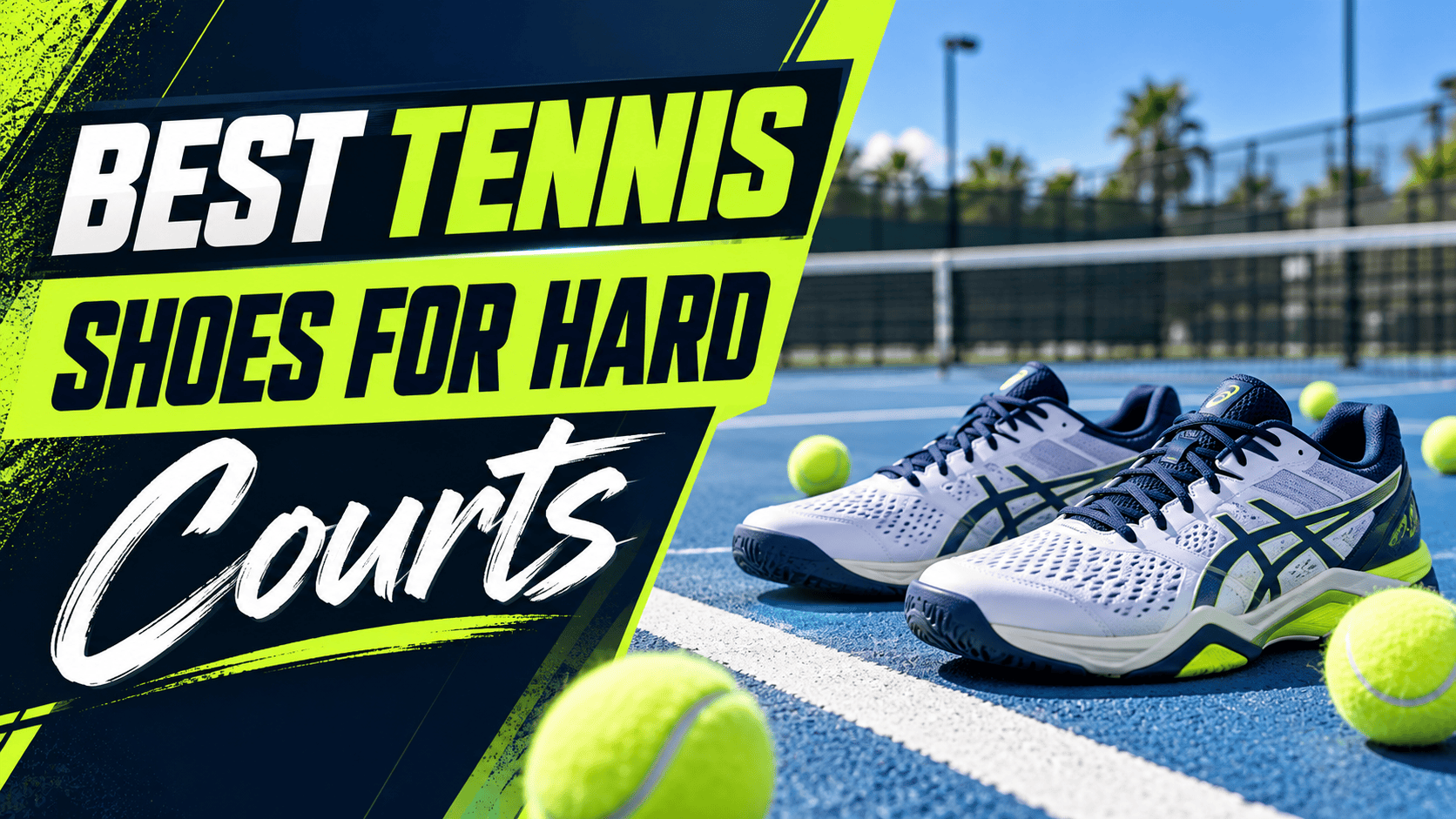
If you want our broader breakdown across different play styles, check our complete guide on the best tennis shoes for hard courts. But if your specific problem is burning through rubber every 90 days, you need the most durable tennis shoes for hard courts built strictly for high-mileage grinders.
Why Trust Coach Mitchell?
I have spent the last 10+ years coaching on the same cracked, sun-baked public hard courts where the nets are held together with zip ties. I am not a sponsored athlete with a free shoe wall in my garage. I buy every pair out of my own pocket, log the hours, and toss them when the outsole is bald.
I burn through a pair every three to four months during heavy season, I toe-drag like a demon on my serve, and I have learned exactly which shoes blow out early and which ones earn their keep. No brand tells me what to say, and I have no patience for marketing fluff. If a shoe is heavy, I will tell you it is heavy. If it gives you blisters, I will tell you.
Coach’s Quick Matrix
If you want the short version before you dive into the details, here is my no-BS breakdown of the most durable tennis shoes for hard courts I have actually put miles on:
- ASICS Gel-Resolution 9 (Best Overall Stability & Outsole Durability) – Best for grinders who slide and drag their toe. The honest catch: It needs a brutal two-week break-in, and it is not light.
- adidas Barricade (Best Ankle Lockdown & Heavy Baseline Support) – Best for big, physical baseliners who need a fortress around their foot. The honest catch: It is a tank, heavy and runs hot in the summer.
- Nike Court Air Zoom Vapor Pro 2 (Best Lightweight Speed) – Best for serve-and-volleyers and speedy movers. The honest catch: It has a narrow fit, and you will burn through the outsole faster if you are a heavy toe-dragger.
- K-Swiss Hypercourt Express 2 (Best Comfort & Wide Feet) – Best for wide-footed players and guys who want comfort out of the box. The honest catch: It lacks the ultimate torsional rigidity for violent lateral cuts.
- New Balance Fresh Foam X Lav V2 (Best Impact Cushioning & Joint Protection) – Best for older knees and players who live on hard courts five days a week. The honest catch: Plush ride means slightly less court feel and court connection.
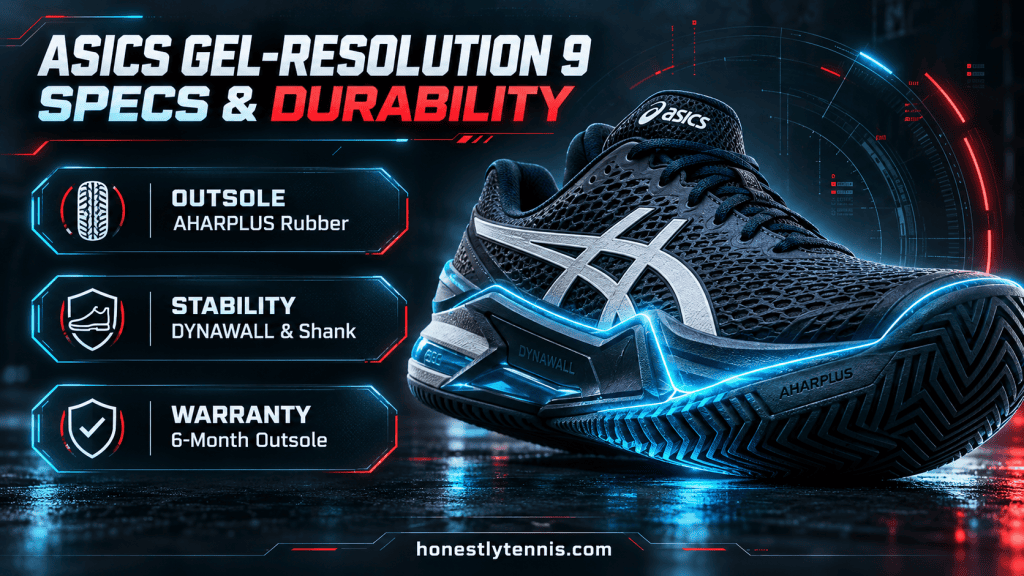
ASICS Gel-Resolution 9 (Best Overall Stability & Outsole Durability)
This is my workhorse. When a student asks me what the most durable tennis shoes for hard courts are for pure longevity, I point them here without thinking twice. It is not flashy, but it just refuses to die.
The On-Court Vibe:
The first time you lace these up, they feel like ski boots. The break-in period is real; give it a solid 6-8 hours of hitting before they soften and mold to your foot. Once they do, the lateral traction is absurdly locked in; you can throw yourself into an open-stance forehand recovery and the shoe does not even think about rolling.
The modified herringbone outsole bites into that gritty hard court surface instead of skating over it. I have logged dozens of three-set matches in August heat, and the grip stays consistent, no weird sliding when you plant and push. It is the most planted, stable feeling shoe on this list by a mile.
Tech That Actually Works:
ASICS uses their AHARPLUS outsole rubber here, and it actually lives up to the hype. This is that high-abrasion rubber that acts like armor against the sandpaper effect of hard courts. I drag my right toe badly on kick serves, and most shoes show a hole in six weeks; these barely scuffed after three months.
The real star is the DYNAWALL and the internal shank torsional rigidity. That stiff midfoot shank is what stops your foot from twisting when you make those violent lateral cuts. You can feel it; the shoe does not fold or flex in the middle like a cheap cross trainer. Add the PGUARD toe drag guard, and you have a shoe built for punishment.
Where It Bleeds:
Weight is the penalty you pay for all that armor. These are not light shoes, and if you are a featherweight mover who lives on quick first steps, you will feel it in the third set. Ventilation is also mediocre at best; your feet will cook in July and August.
The toe box is also a bit roomy for narrow feet. If you have skinny feet, you will need to really crank the laces to get a lockdown fit. But for average to wide feet, that extra room is a blessing.
Coach’s Fit & Packing Advice:
This shoe fits true to length but generous in the forefoot, so order your normal size unless you have truly narrow feet. I recommend a thicker, cushioned tennis sock to take up a little volume and manage sweat. The break-in will chew up your heels if you wear no-show running socks.
And for the love of your car, do not throw these swampy bricks back into your main bag compartment after a match. Keep them isolated in a dedicated tennis racket bag with a ventilated shoe tunnel; otherwise everything you own will smell like a locker room.
Alternative Pick:
If you want the same ASICS stability but with slightly more speed, look at the ASICS Court FF 3.
Adidas Barricade (Best Ankle Lockdown & Heavy Baseline Support)
The Barricade has been around forever for a reason. It is the shoe I give to my big guys, the 190+ pound baseliners who grind for two hours and punish their gear. This shoe is a fortress.
The On-Court Vibe:
Putting on the Barricade feels like strapping into a brace, in a good way. The ankle lockdown is immediate and total; the padded collar and lacing system really cinch your foot down over the midsole. You feel incredibly secure on hard lateral slides; there is zero heel slip and zero fear of rolling over the edge.
Do not expect to feel light on your feet. This is a heavy, deliberate shoe that wants you to plant, drive, and hammer the ball. The traction is aggressive and loud; it squeaks and grips on hard courts even when there is a little dust on the surface. It rewards powerful, physical tennis.
Tech That Actually Works:
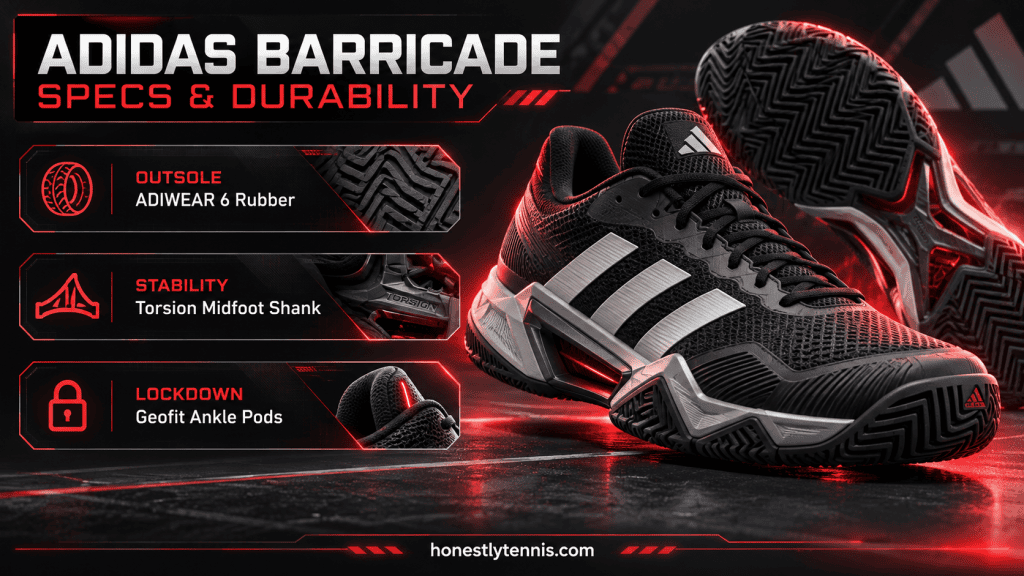
adidas builds this with an ADITUFF toe and a full ADIWEAR 6 outsole that is designed specifically for abrasive hard courts. The rubber compound is dense and hard, exactly what you want when the court is chewing through softer compounds. I have seen students get five months out of the outsole before even thinking about balding.
The torsional system here is a classic midfoot shank that provides that shank torsional rigidity every hard court player needs. It keeps the shoe from twisting under load, which is the number one cause of those ugly ankle rolls in running shoes. The Geofit ankle collar is not marketing fluff, it actually fills around your ankle for a true locked-in feel.
Where It Bleeds:
It is heavy, period. If you are a 130-pound junior who relies on pure speed, this will feel like running in boots. Break-in is also stiff; the first three hits will have you questioning your life choices before the upper softens.
Breathability is another weak spot. The upper is built for durability and support, not airflow. On 95-degree days, your feet will be steaming when you pull them off, so be prepared for that.
Coach’s Fit & Packing Advice:
The Barricade fits true to size and slightly narrow in the midfoot, which helps with that lockdown feel. If you have wide feet, you might want to go half a size up or look elsewhere. Use a thin, moisture-wicking sock, because the shoe itself already has so much padding.
These things hold sweat like a sponge, so let them air out for 24 hours between sessions. I always tell my players to stash them in the ventilated shoe tunnel of their dedicated tennis racket bag; it keeps the moisture and stink away from your grips and strings. Never zip them in with your fresh clothes.
Alternative Pick:
If you want Barricade support with a bit more bounce, try the adidas SoleCourt Boost.
Nike Court Air Zoom Vapor Pro 2 (Best Lightweight Speed)
This is the dancer of the group. If you love to come forward, chip and charge, and beat your opponent with foot speed, this is your shoe. It is built for players who live on their toes.
The On-Court Vibe:
Right out of the box, the Vapor Pro 2 feels like a sock with traction. Almost zero break-in; you can play a match in them brand new and not get hot spots. On court, they are ridiculously quick, the low-to-the-ground ride and minimal weight make your first step explosive.
Traction is precise and grippy, but it is a thinner, more responsive outsole. You feel every bit of the hard court under your feet, which is great for court feel but means you feel the pounding more. For lateral slides, it holds well for light to medium players, though super heavy grinders might overpower it.
Tech That Actually Works:
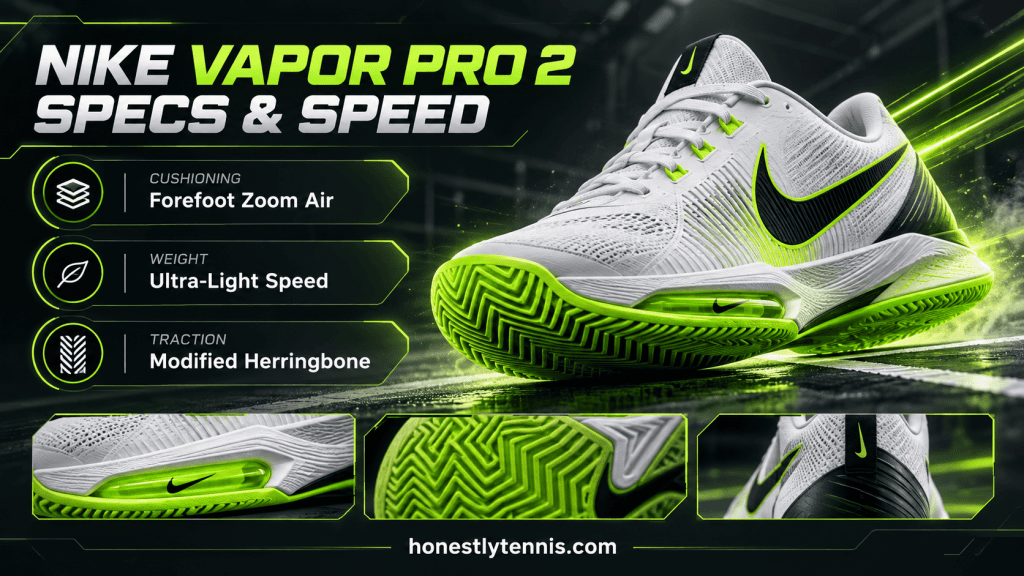
Nike uses a thin, full-length Zoom Air unit and a lightweight mesh upper that actually works for speed. The outsole is a modified herringbone with exposed Zoom, but the rubber is still surprisingly tough for such a thin shoe. It will not last as long as an ASICS AHARPLUS outsole, but it is tougher than it looks.
The internal shank here is more flexible than the Barricade or Gel-Resolution, trading some of that shank torsional rigidity for flexibility and court feel. That is the trade-off: you get better articulation and speed, but you sacrifice a bit of that brute-force anti-twist protection. The toe drag guard is present but minimal; it is not built for heavy draggers.
Where It Bleeds:
Durability for toe-draggers is the big one. If you scrape your toe hard on serves and slides, you will eat through the forefoot overlay faster than the other shoes on this list. The narrow fit is also a real problem for wide feet; this shoe is built on a narrow last.
Support is also less than the tanks. If you are a heavy player who needs maximum ankle lockdown, this shoe will feel a little too minimal. It is a scalpel, not a sledgehammer, and it is not trying to be.
Coach’s Fit & Packing Advice:
This shoe runs narrow and long, so most players with average feet should go half a size down; wide-footers should probably skip it entirely. Wear a thin, low-cut tennis sock to maximize the sock-like fit and court feel. Thick socks will make it feel sloppy and hot.
Because these are so breathable and light, they actually pack down small. They still stink after a long grind, so use that ventilated shoe tunnel in your dedicated tennis racket bag to keep them separate from your rackets and keep the funk contained.
Alternative Pick:
If you love the Vapor line but need a bit more durability, the Nike Vapor Cage 4 is the more armored cousin.
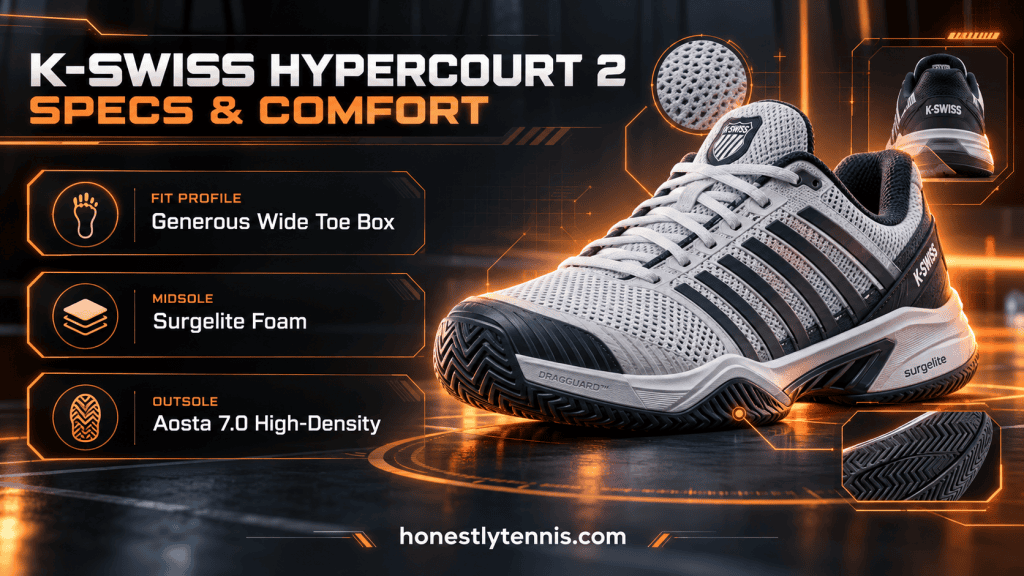
K-Swiss Hypercourt Express 2 (Best Comfort & Wide Feet)
I recommend this to more adult league players than any other shoe. It is the one guys actually want to keep wearing after the match is over. If you have wide feet or you hate the break-in torture, listen up.
The On-Court Vibe:
This is the most comfortable shoe out of the box on this entire list, hands down. No break-in, no blisters, just instant all-day comfort. The wide base and generous toe box make it feel stable without feeling clunky.
On hard courts, the traction is reliable, and the cushioning is immediate. You do not get that harsh, jarring feeling you get from some of the stiffer stability shoes. It glides rather than grips aggressively, which some grinders might not love, but for most club players it is perfectly secure for lateral movements.
Tech That Actually Works:
K-Swiss uses their DuraWrap and AOSTA 7.0 high-density outsole rubber, which is solid against the 60-grit nature of hard courts. It is not quite as dense as ASICS or adidas, but it holds up well for 3-4 months of regular play. The real tech win is the Surgelite midsole; it is lightweight and cushy without feeling mushy.
For stability, they use a 180-degree thermal plastic Plantar Support Chassis that gives you decent shank torsional rigidity without making the shoe feel like a board. It is a nice middle ground; you get enough support to prevent that scary midfoot flex on lateral cuts, but the shoe still flexes naturally when you run. The toe bumper is also well-placed for moderate draggers.
Where It Bleeds:
Ultimate lateral lockdown is not its strength. If you are a young, violent mover who throws his body sideways with 100% intensity, you will find this shoe flexes a bit more than the Gel-Resolution or Barricade. It is built for comfort and glide, not for maximum prison-guard ankle support.
The outsole durability, while good, is a step below the best. Heavy baseliners who play 5-6 days a week will wear it down faster than the ASICS. And the upper, while breathable, can feel a little less locked-in for narrow feet.
Coach’s Fit & Packing Advice:
This is the shoe for wide feet, it fits wide and true to size with a very roomy toe box. If you have narrow feet, you will feel like you are swimming in it. I suggest a standard cushioned sock, nothing too thick, as the shoe already has great padding.
It is the easiest shoe to live with day-to-day, but it still needs airing out. Toss it in the ventilated shoe tunnel of your dedicated tennis racket bag after you play so the breathable mesh does not soak your other gear. It dries fast, which is a nice bonus.
Alternative Pick:
If you need even more arch support with that wide comfort, check the K-Swiss Express Light 3.
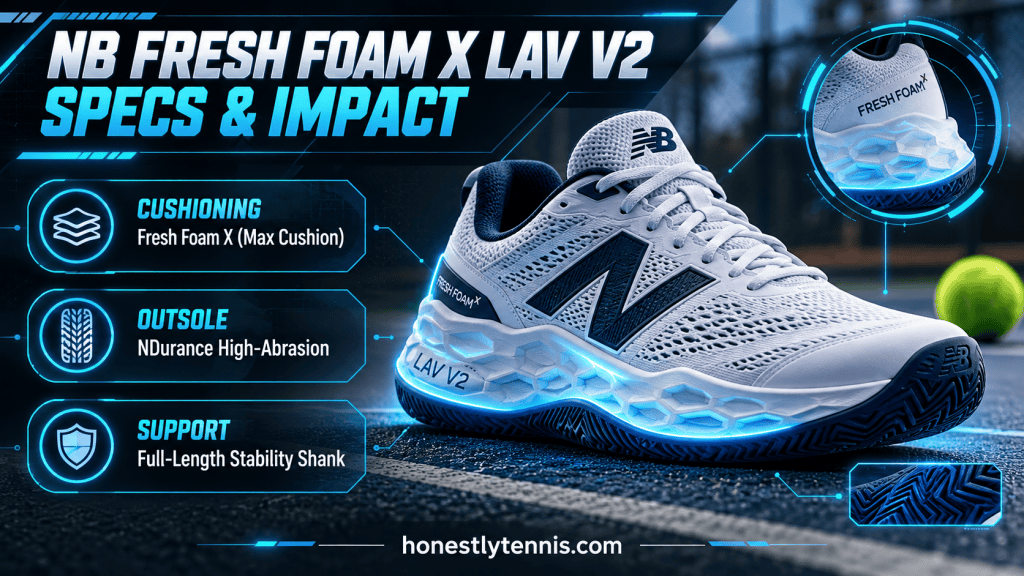
New Balance Fresh Foam X Lav V2 (Best Impact Cushioning & Joint Protection)
If your knees and back are screaming at you after a couple of hours on concrete, this is the shoe I tell you to try. New Balance built this for hard court pounding, plain and simple.
The On-Court Vibe:
The first step in the Lav V2 is pure plushness. The Fresh Foam X midsole feels soft and forgiving underfoot, like you have a little shock absorber on that brutal hard surface. For older players or anyone with joint issues, that impact cushioning is a game-changer on long baseline rallies.
You still get good traction, but the ride is noticeably higher and softer than the Vapor Pro 2. You feel less connected to the court, which some touch players dislike, but your joints will thank you. Lateral support is surprisingly good for such a cushy shoe, though it is more of a cushioned lockdown than a hard plastic lockdown.
Tech That Actually Works:
The Fresh Foam X compound is the real deal for impact protection, it actually dissipates the shock of hard courts instead of just feeling soft. The outsole uses NDurance rubber, which is New Balance’s high-abrasion compound. It handles the sandpaper effect well and holds up for months of regular play without balding quickly.
For stability, they use a full-length stability shank that provides solid shank torsional rigidity. It is cleverly integrated so the shoe still feels soft but does not twist when you cut hard. The toe drag protection is decent, with a reinforced medial drag tip that helps if you scrape on serves.
Where It Bleeds:
Court feel is muted. If you love that low, precise, feel-every-pebble sensation, you will find this shoe a bit too high and plush. It is also a touch heavier than the speed shoes due to all that foam.
Fit can be tricky; it runs slightly long, so many players go half a size down. And the plush feel, while great for joints, can feel a little less explosive when you try to push off for a sprint. It protects you, but it does not propel you like a Vapor.
Coach’s Fit & Packing Advice:
I tell most players to try half a size down from their normal running shoe size, especially if you are between sizes. The toe box is medium-wide, good for most feet. Wear a well-cushioned sock to complement the Fresh Foam; your feet will be floating.
This shoe soaks up sweat with all that foam, so do not leave it zipped up wet. Air it out overnight and always keep it in the ventilated shoe tunnel of your dedicated tennis racket bag so you are not breeding bacteria next to your overgrips.
Alternative Pick:
If you want New Balance cushioning with even more herringbone durability, look at the New Balance FuelCell 996v6.
Hard Court Shoe Architecture – What Actually Keeps You Upright
Let us get cynical for a minute about why most shoes fail on hard courts. Brands love to sell you soft, bouncy marketing stories, but concrete does not care about your cloud-like ride. This surface is unforgiving, and finding the most durable tennis shoes for hard courts means looking past the paint job and checking the chassis.
Tennis Shoes vs. Running Shoes: Why Running Shoes Lead Directly to Emergency Room Visits
Running shoes are built to go forward, that is it. They have soft, elevated heels, narrow bases, and zero lateral stability, which is exactly the opposite of what you need on a tennis court. On a hard court, you are not jogging, you are planting, cutting, and sliding sideways at full speed.
Put a running shoe through a hard lateral cut and the soft midsole collapses and your foot rolls right over the edge. I have seen it a dozen times: a player pushes off for a wide forehand, and his ankle just gives way because there is no lateral stability wall or shank to hold the foot. The outsole is also wrong; running shoe rubber is soft and shallow and gets shredded by the 60-grit texture in a few weeks. If you want to protect your ankles, leave the running shoes for the road and put real tennis shoes on the court.
The 6-Month Outsole Warranty: Explain How Brand Warranties Work and Why Heavy Baseliners Should Demand One
Most of the truly durable tennis shoes for hard courts offer a 6-month outsole durability guarantee, and you should absolutely demand it. Here is how it works: if you wear through the outsole down to the midsole within six months of purchase, the brand will replace the shoes for free. You just need your receipt and a photo of the worn-out bottom.
This matters because hard courts are merciless and heavy baseliners destroy outsoles. If you are a grinder who plays four times a week and swings a heavy, powerful frame like the one in my Babolat Pure Drive review, you are generating huge forces and dragging your foot a lot. That friction chews rubber fast, and without a warranty you are buying three pairs a year. Brands that offer this guarantee, like ASICS and adidas, are confident in their high-abrasion compounds, and that confidence should matter to you.
Outsole Tread Patterns: Modified Herringbone vs. Pivot Points on Abrasive Concrete
Not all treads survive concrete the same way. The classic herringbone pattern, with its zig-zag grooves, is the gold standard for hard courts because it gives you multi-directional grip. Modified herringbone, which is what the most durable tennis shoes for hard courts use now, takes that zig-zag and adds thicker lugs and more open channels to handle dust and hard court grit.
You will sometimes see shoes with circular pivot points or super fine treads, those are for clay or for indoor courts, and they get slick fast on abrasive concrete. On a gritty public court, you want that deep, open herringbone that can bite and still clear dust as you move. Look at the bottom of the shoe, if the tread looks shallow or has a smooth circle under the ball of your foot, it is not built for hard courts.
Final Call to Action
Stop lying to yourself that your beat-up cross trainers have one more month in them. If the tread is smooth, if the toe is dragging through to foam, or if your foot is sliding inside the shoe, that shoe is dead, and it is hurting your game. The right pair is not an expense; it is injury insurance, and it is the foundation for every decent shot you hit.
Invest in one of these five tanks, break them in right, and keep them out of your bag’s main compartment. Good footwork makes your racket work; bad footwork makes even the best racket useless. So grab the most durable tennis shoes for hard courts for your foot type, get back on that concrete, and start moving like you actually mean it.


Hi, I’m Coach Mitchell. With over a decade of experience on the tennis court, I created Honestly Tennis to share my passion for the game. Whether you are a beginner looking for your first racquet or an advanced player wanting to upgrade your gear, my goal is to provide honest reviews and helpful guides to elevate your game.