Disclosure: At Honestly Tennis, we independently test gear. As an Amazon Associate, we earn from qualifying purchases at no extra cost to you.
Every tennis player knows the frustration. You open a fresh $5 can of pressurized tennis balls, enjoy a great practice session, and come back three days later to find them feeling completely dead and flat. Suddenly, those new balls aren’t so new anymore.
I got tired of throwing away perfectly usable tennis balls just because they had lost their bounce. So I bought a bulk bucket of pressureless balls, loaded 100 of them into my ball machine, and hit thousands of forehands over 30 days.
This pressureless tennis balls review covers what actually happened. I wanted to know whether these cheaper balls could handle daily hard-court practice, save real money, and still feel good off the racket.
The Science Made Simple: Why Don’t They Die?
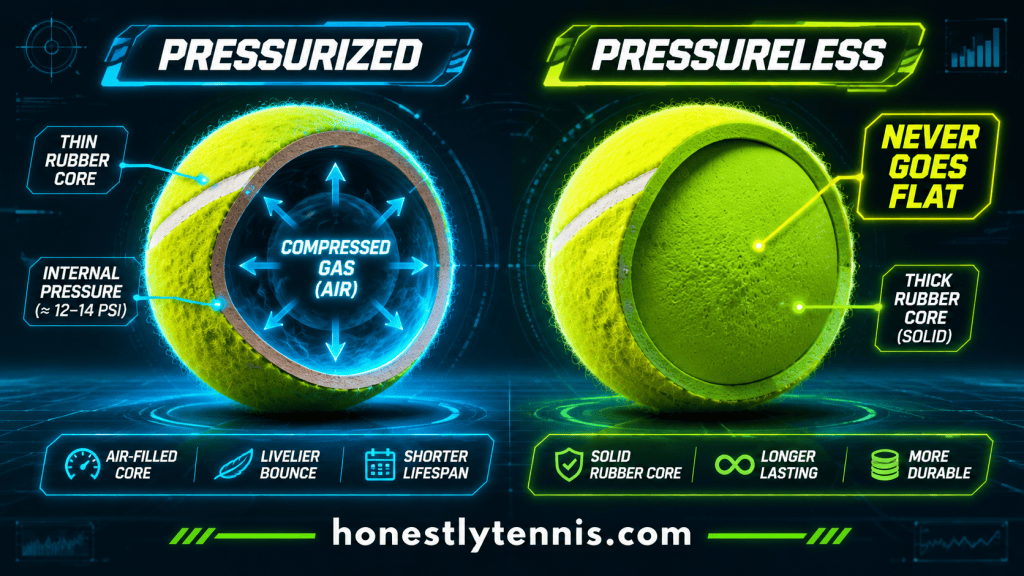
The biggest difference between regular and pressureless tennis balls is hidden inside the rubber core.
Regular pressurized balls get their bounce from compressed gas trapped inside the core. Once you open the can, that gas slowly escapes through the rubber, causing the balls to lose their bounce and feel incredibly soft.
Pressureless balls work completely differently. They use a thicker, heavier rubber core to create their bounce through the structure of the rubber itself. Since there is no compressed gas to escape, they don’t go flat in the same way as regular balls.
There is another interesting detail: as the felt wears down, pressureless balls can actually start feeling slightly faster and bouncier because there is less fuzzy felt creating air resistance. However, do not mistake worn felt for better performance. Once the cover gets too thin or damaged, the ball needs replacing.
The 30-Day Ball Machine Torture Test
For this pressureless tennis balls review, I loaded 100 pressureless balls into my machine and took them through a full month of brutal hard-court practice. I used them for repeated forehand and backhand drills, working on timing, footwork, and consistency. If you’re planning to buy a machine for similar solo sessions, check out my guide to the best tennis ball machines.
The Good: Bounce That Keeps Going
The very first thing I noticed was how consistent the bounce remained. Unlike regular balls that gradually lose their pop, these pressureless balls kept producing a dependable rebound throughout the entire month. That consistency matters when you are practicing alone. You do not want every third ball arriving differently because one ball has lost more pressure than another.
The money savings were also hard to ignore. I did not need to buy another case of fresh tennis balls during the 30-day test. For someone who practices several times a week, that can make a massive financial difference over a full season.
The Bad: The “Rock” Feeling
Now for the part that some players won’t like. Pressureless tennis balls feel heavier and much firmer when they hit your racket.
The difference is extremely noticeable, especially when you are hitting hard forehands or returning fast feeds. Compared with a fresh pressurized ball, the impact feels less lively and a little like hitting a small rubber rock. You can still practice your groundstrokes and timing, but do not expect the same soft, comfortable contact you get from a fresh match ball.
A Warning for Players With Tennis Elbow
If you already struggle with tennis elbow or arm discomfort, be very careful. Repeatedly hitting firmer balls can make practice uncomfortable, particularly during long sessions on hard courts. I wouldn’t recommend starting with hours of pressureless ball-machine work if your arm is already sore. Take breaks, and switch to regular balls if the heavy impact bothers you.
Top Pressureless Picks (Coach’s Recommendations)
After looking at what matters most for regular practice, these are two options worth considering.
Wilson Triniti: The Modern Hybrid
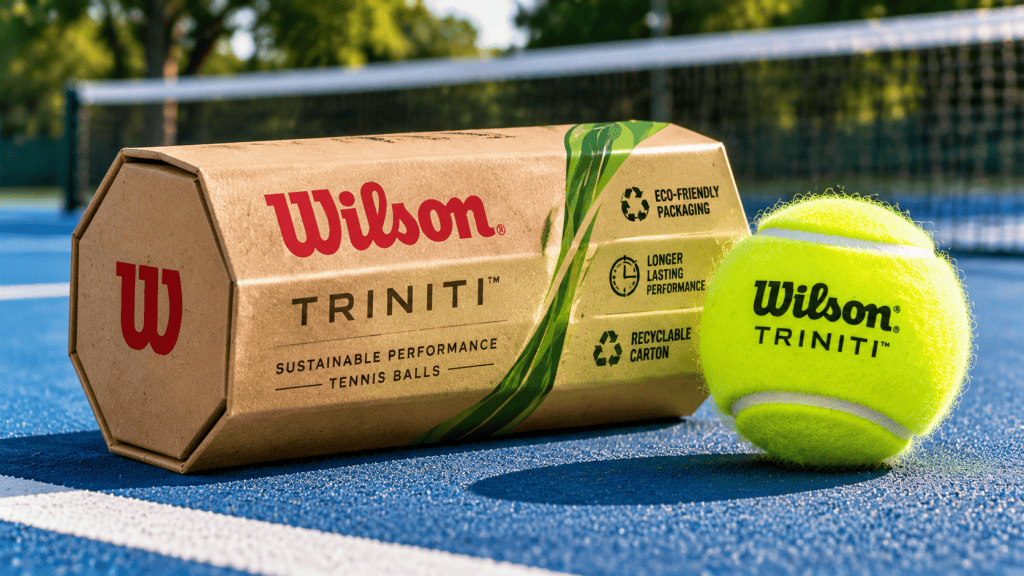
Wilson Triniti deserves a place on this list, but there is an important distinction. It is a specially engineered low-pressure performance ball, not the same as a traditional bulk pressureless practice ball.
Its Engage Core and flexible STR felt are designed to maintain a fresh-ball feel much longer than a standard tennis ball. It also comes in recyclable packaging rather than a conventional pressurized plastic can. What I like about the Triniti is its playing feel. It comes much closer to a regular tennis ball than the typical firm pressureless practice ball. Learn more about their eco-friendly approach on the Wilson Official Site.
My recommendation: Choose Wilson Triniti if you want a premium ball for regular hitting and are willing to pay a bit more for a better, softer playing feel.
Gamma Pressureless Bucket: The Practice Workhorse
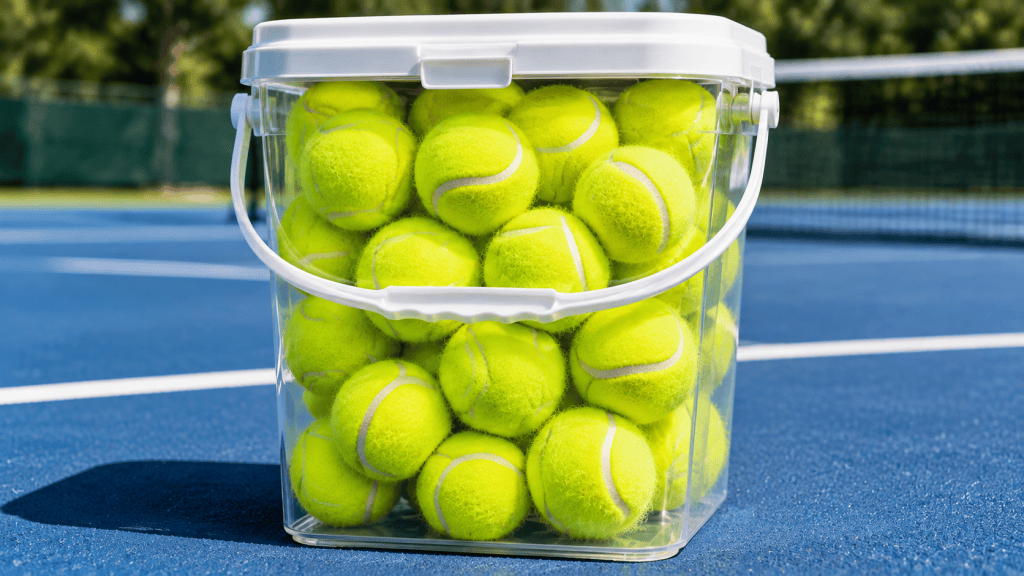
If you are a coach, a ball-machine regular, or someone who burns through hundreds of balls, Gamma is worth a serious look.
Gamma pressureless balls are designed for teaching, training, and repeated practice. They have a durable rubber construction and are available in bulk packs, making it easier to fill a large hopper without spending a fortune. They aren’t going to feel exactly like fresh match balls, but that is a reasonable trade-off when your main goal is getting more practice for your money.
My recommendation: Get Gamma if you need quantity, durability, and dependable practice balls for your hopper.
Final Verdict: Should You Buy Them?
So, what is my final call from this pressureless tennis balls review?
It comes down to what you are trying to achieve. If you are playing an actual match, practicing serves for competition, or playing sets with friends, stick with regular pressurized tennis balls. You want the correct bounce, speed, and feel when preparing for real match conditions. Check my guide to the best tennis balls for hard courts if you need help choosing the right match balls.
But if you are practicing alone with a ball machine, filling a hopper, or running regular coaching drills, pressureless balls are a brilliant investment. You get a longer-lasting bounce and significantly fewer replacement costs.
My simple rule as a coach: use pressurized balls for matches, and use pressureless balls for repetition. You don’t need to spend money on fresh match balls every time you want to hit 500 forehands. Buy a good bulk set, take care of your arm, and save the expensive balls for when the score actually matters.


Hi, I’m Coach Mitchell. With over a decade of experience on the tennis court, I created Honestly Tennis to share my passion for the game. Whether you are a beginner looking for your first racquet or an advanced player wanting to upgrade your gear, my goal is to provide honest reviews and helpful guides to elevate your game.