Disclosure: At Honestly Tennis, we independently test gear. As an Amazon Associate, we earn from qualifying purchases at no extra cost to you.
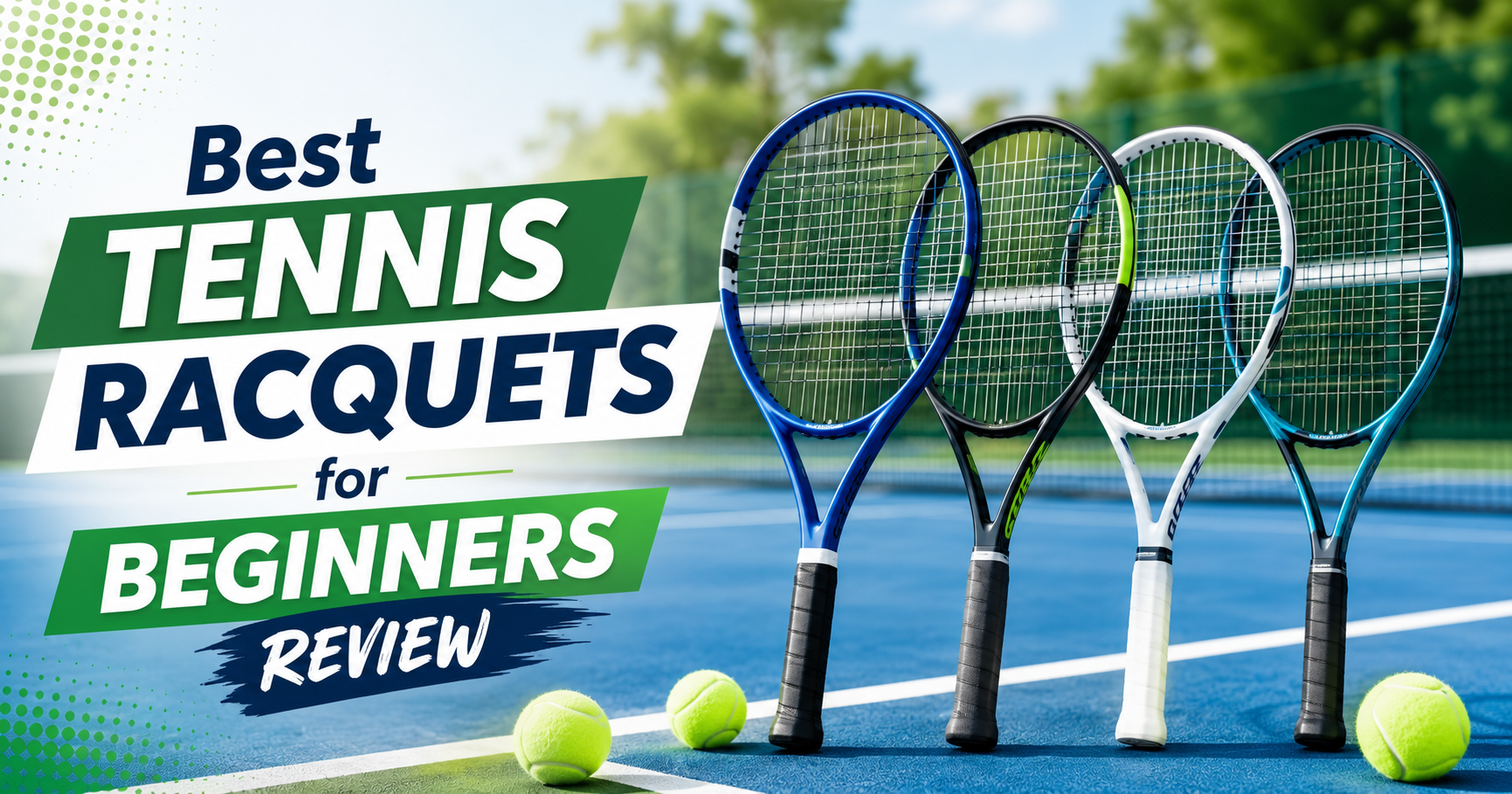
Starting tennis is exciting, but choosing your first racquet can feel confusing. There are too many brands, sizes, weights, and product names, and every racquet seems to promise more power, more control, and better performance.For a beginner, the goal is simple: choose a racquet that is easy to swing, forgiving on off-center shots, comfortable in the hand, and powerful enough to help you learn the game with confidence.In this guide, we have selected beginner-friendly tennis racquets for adults, recreational players, and juniors. Whether you are buying your first racquet, returning to tennis after a long break, or choosing a racquet for a child, this list will help you find a practical starting point.
Quick Picks: Best Tennis Racquets for Beginners
Compare the best beginner-friendly tennis racquets based on comfort, performance and playing level.
| Racquet | Best For | Type |
|---|---|---|
| Babolat Boost Drive | Best overall for adult beginners | Adult beginner |
| HEAD Boom Team | Best forgiving power racquet | Adult beginner/intermediate |
| HEAD Ti.S6 | Best lightweight oversize racquet | Adult recreational |
| Yonex EZONE Ace | Best easy-swing recreational racquet | Adult beginner |
| Wilson Ultra 100L V5 | Best for athletic beginners improving fast | Beginner to intermediate |
| Babolat Aero Junior 26 | Best junior racquet for spin | Junior |
| HEAD Speed 25 Junior | Best junior racquet for kids 8–10 | Junior |
| Wilson US Open 25 Junior | Best budget junior racquet | Junior |
What Should Beginners Look for in a Tennis Racquet?
A beginner tennis racquet should make the game easier, not harder. You do not need the heaviest or most advanced frame when you are still learning timing, footwork, and swing technique.
Here are the main features to look for:
Larger head size
A bigger head size gives you a larger sweet spot. That means you have a better chance of making clean contact, even when your timing is not perfect.
For most beginners, a head size around 100–110 sq in is a comfortable starting range. Complete beginners often benefit from the higher end of that range.
Lightweight frame
A lighter racquet is easier to swing and easier to control during long practice sessions. It can also help reduce arm fatigue while you are learning proper technique.
Most beginner-friendly adult racquets fall around 250–285g unstrung, depending on the player’s strength and athletic level.
Easy power
Beginners usually have shorter and slower swings. A racquet with easy power helps the ball travel deeper without forcing you to swing too hard.
Comfortable grip size
Grip size matters more than many beginners realize. A grip that is too small or too large can feel uncomfortable and may make it harder to control the racquet.
Adult vs junior size
Adults usually need a full-size 27-inch racquet. Kids and younger juniors need shorter racquets such as 23, 25, or 26 inches depending on age and height.
Best Tennis Racquets for Beginners Review
Babolat Boost Drive — Best Overall for Adult Beginners
The Babolat Boost Drive is one of the strongest options for adults who are new to tennis or coming back after a long break. It is designed to feel light, forgiving, and easy to play with, which is exactly what most beginners need.
The large 105 sq in head gives you a forgiving hitting area, while the lightweight frame helps you swing without feeling tired too quickly. It also has a 16×19 string pattern, which is common in beginner-friendly racquets because it can support easier power and spin.
This racquet is a good choice if you want a modern beginner racquet that still feels like a proper adult frame.
Best for: Adult beginners, casual players, recreational tennis
Why beginners may like it: Lightweight, forgiving, easy power
Things to check before publishing: Current Amazon availability, grip sizes, exact model year
Pros
- Forgiving 105 sq in head size
- Lightweight feel
- Good for casual and beginner players
- Easy to swing
- Suitable for adults
Cons
- May not offer enough control for advanced players
- Powerful feel may take time to control for complete beginners
HEAD Boom Team — Best Forgiving Power Racquet
The HEAD Boom Team is a beginner-to-intermediate friendly racquet designed for power, comfort, and forgiveness. It has one of the larger head sizes in the Boom series, which makes it easier for newer players to make consistent contact.
This racquet is a good option for beginners who want a forgiving adult racquet but do not want something that feels too basic. It can work well for players who are serious about improving and want a frame they can continue using as they develop.
Best for: Beginners who want forgiveness and room to improve
Why beginners may like it: Larger head size, lightweight design, easy power
Things to check before publishing: Current Amazon listing, exact 2026 model name, grip options
Pros
- Beginner and intermediate friendly
- Forgiving head size
- Comfortable power
- Good for learning rallies
- More future-proof than many very cheap beginner racquets
Cons
- May cost more than basic starter racquets
- Complete beginners may still prefer a cheaper first racquet
HEAD Ti.S6 — Best Lightweight Oversize Racquet
The HEAD Boom Team is a beginner-to-intermediate friendly racquet designed for power, comfort, and forgiveness. It has one of the larger head sizes in the Boom series, which makes it easier for newer players to make consistent contact.
This racquet is a good option for beginners who want a forgiving adult racquet but do not want something that feels too basic. It can work well for players who are serious about improving and want a frame they can continue using as they develop.
Best for: Beginners who want forgiveness and room to improve
Why beginners may like it: Larger head size, lightweight design, easy power
Things to check before publishing: Current Amazon listing, exact 2026 model name, grip options
Pros
- Beginner and intermediate friendly
- Forgiving head size
- Comfortable power
- Good for learning rallies
- More future-proof than many very cheap beginner racquets
Cons
- May cost more than basic starter racquets
- Complete beginners may still prefer a cheaper first racquet
Yonex EZONE Ace — Best Easy-Swing Recreational Racquet
The Yonex EZONE Ace is designed for beginners and recreational players who want effortless power in a reliable frame. It has a 102 sq in head size and a lightweight 260g frame, making it easier to swing than many performance racquets.
This is a good option for players who want something beginner-friendly but not oversized. It can suit adults who want comfort, control, and easy handling in one racquet.
Best for: Recreational beginners who want an easy-swing racquet
Why beginners may like it: Lightweight, comfortable, manageable head size
Things to check before publishing: Exact model year and Amazon listing
Pros
- Lightweight 260g frame
- Good for beginners and recreational players
- 102 sq in head size offers a balance of forgiveness and control
- Easy to handle
Cons
- Not as forgiving as a 105–115 sq in racquet
- May not be powerful enough for players who want maximum help from the frame
Wilson Ultra 100L V5 — Best for Beginners Ready to Improve
The Wilson Ultra 100L V5 is not the easiest racquet on this list, but it can be a good choice for athletic beginners or improving players who want a lighter performance-style frame.
With a 100 sq in head size and 280g unstrung weight, it is more controlled than oversized beginner racquets. It may suit beginners who already have decent coordination or plan to take lessons and improve quickly.
If you are a complete beginner who wants maximum forgiveness, the Babolat Boost Drive, HEAD Boom Team, or HEAD Ti.S6 may feel easier. But if you want a racquet you can grow into, the Ultra 100L V5 is worth considering.
Best for: Athletic beginners, improving recreational players
Why beginners may like it: Lighter performance frame, spin-friendly string pattern, good growth potential
Things to check before publishing: Current Amazon availability and exact V5 listing
Pros
- Lighter than many performance racquets
- Good for players who are improving quickly
- Balanced blend of power and control
- 16×19 string pattern
Cons
- Less forgiving than oversized beginner racquets
- Not ideal for very young or complete beginners
Best Junior Tennis Racquets for Beginner Kids
Junior Tennis Racquet Size Chart
Choosing the correct racquet length can make tennis easier and more enjoyable for a child. A racquet that is too long or heavy may be difficult to swing, while one that is too short may limit reach and power.
Use the following chart as a general starting point:
Child’s Approximate Age | Child’s Height | Recommended Racquet Length |
2–4 years | Under 3 ft 3 in / 100 cm | 17–19 inches |
4–6 years | 3 ft 3 in–3 ft 9 in / 100–115 cm | 21–23 inches |
6–8 years | 3 ft 9 in–4 ft 5 in / 115–135 cm | 23–25 inches |
8–10 years | 4 ft 5 in–4 ft 11 in / 135–150 cm | 25–26 inches |
10–12 years | Around 4 ft 7 in–4 ft 11 in / 140–150 cm | 26 inches |
Older or taller juniors | Over 4 ft 11 in / 150 cm | 26–27 inches |
These ranges are approximate because children of the same age may have different heights, strength levels, and playing experience. Height and physical comfort should usually take priority over age.
How to Check the Racquet Fit
Ask the child to stand upright in tennis shoes and hold the racquet normally with their arm relaxed by their side. The racquet head should sit close to the ground without pressing or bumping against it.
If the racquet hits the ground, it may be too long. If it remains far above the ground, it may be too short. When a child falls between two sizes, the smaller and lighter racquet is generally the safer choice for a beginner.
For example, the HEAD Speed 25 Junior is designed for many players in the 25-inch range, while the Babolat Pure Aero Junior 26 is better suited to taller or more developed juniors who are preparing to move toward a full-size adult racquet.
Adults and kids should not always use the same racquet. A junior racquet is shorter, lighter, and easier for children to swing. If the racquet is too long or heavy, the child may struggle with timing and control.
Babolat Aero Junior 26 — Best Junior Racquet for Spin
The Babolat Aero Junior 26 is a strong junior option for young players who are ready for a 26-inch racquet. It has a 100 sq in head size and a lightweight junior-friendly build.
This racquet is better suited for older juniors who are developing proper strokes and want a racquet inspired by Babolat’s spin-focused Aero line.
Best for: Older juniors, young players learning topspin
Why beginners may like it: Lightweight, spin-friendly, junior size
Things to check before publishing: Age/height fit and current Amazon listing
Pros
- Junior-friendly 26-inch length
- 100 sq in head size
- Lightweight for young players
- Good for developing spin
Cons
- Not for very young children
- Adults should choose a full-size racquet instead
HEAD Speed 25 Junior — Best for Kids Around 8–10
The HEAD Speed 25 Junior is designed for young players and is a better choice for kids than a full adult racquet. It is lightweight and easier to manage for children who are learning basic strokes.
A 25-inch junior racquet generally suits many kids around the 8–10 age range, but you should always check the child’s height before buying.
Best for: Kids around 8–10 years old
Why beginners may like it: Lightweight junior size, easier control, beginner-friendly handling
Things to check before publishing: Age/height recommendation and current Amazon listing
Pros
- Good junior length
- Lightweight for kids
- Easier to swing than adult racquets
- Suitable for beginner lessons
Cons
- Too small for most adults
- Kids may outgrow it as they get taller
Wilson US Open 25 Junior — Best Budget Junior Racquet
The Wilson US Open 25 Junior is a simple, affordable junior racquet for kids starting tennis. It is not a professional-level racquet, but it can be a practical starter option for lessons, casual play, or first-time practice.
If your child is just trying tennis for the first time, a budget-friendly junior racquet can make sense before investing in a more advanced frame.
Best for: Beginner kids, casual junior practice, first tennis lessons
Why beginners may like it: Affordable, lightweight, easy to swing
Things to check before publishing: Current Amazon listing and available colors
Pros
- Budget-friendly junior option
- Lightweight
- Suitable for first-time kids
- Easy to handle
Cons
- Not for advanced junior players
- Less premium feel than graphite junior racquets
Adult vs Junior Racquet: Which One Should You Buy?
If you are an adult beginner, do not choose a junior racquet just because it is lighter or cheaper. Junior racquets are shorter and designed for kids. Most adults should start with a full-size 27-inch racquet.Choose a junior racquet only if you are buying for a child or young player. For adults, beginner-friendly options like the Babolat Boost Drive, HEAD Boom Team, HEAD Ti.S6, Yonex EZONE Ace, or Wilson Ultra 100L V5 make more sense.
How to Choose the Best Beginner Tennis Racquet
Choose a forgiving head size
For complete beginners, a larger head size can make tennis more enjoyable because it gives more margin for error.
Avoid racquets that are too heavy
A heavy racquet can feel stable, but beginners may struggle to swing it properly. If your arm gets tired quickly, your technique can break down.
Do not buy only based on professional players
A racquet used by a pro player is not always the best choice for a beginner. Professional racquets are often heavier and more demanding.
Check grip size
A comfortable grip helps you hold the racquet properly. If you are unsure, many beginners choose a common grip size and add an overgrip if needed.
Think about your goal
If you only want casual weekend tennis, choose something simple and forgiving. If you plan to take lessons and improve quickly, choose a racquet that gives you room to grow.
Final Verdict: Which Beginner Tennis Racquet Should You Choose?
If you are an adult beginner and want the safest overall choice, the Babolat Boost Drive is a strong starting point because it is lightweight, forgiving, and easy to play with.
If you want maximum forgiveness and easy power, the HEAD Ti.S6 is also a great option for recreational play. If you want something modern with room to improve, the HEAD Boom Team or Wilson Ultra 100L V5 may be better.
For kids, choose based on age and height. The Wilson US Open 25 Junior, HEAD Speed 25 Junior, and Babolat Aero Junior 26 are better junior-focused options than adult racquets.
The best beginner racquet is not always the most expensive one. It is the one that helps you enjoy practice, make clean contact, and keep improving without making the game feel harder than it needs to be.
Choosing the right tennis racquet is an important first step for any new player, but learning the basics of the game is equally important. Beginners who understand scoring, court rules, and how matches work can improve faster and enjoy playing more. If you are just starting your tennis journey, check out our simple tennis rules guide for beginners to understand the fundamentals of the game.
FAQs About Beginner Tennis Racquets
What is the best tennis racquet for beginners?
For most adult beginners, a lightweight racquet with a forgiving head size is the best choice. Babolat Boost Drive, HEAD Boom Team, HEAD Ti.S6, and Yonex EZONE Ace are good examples to compare.
Should beginners use a heavy or light tennis racquet?
Most beginners should start with a lighter racquet because it is easier to swing and control. Stronger or more athletic beginners may prefer a slightly heavier frame for stability.
Is a junior tennis racquet good for adults?
No, most adults should not use a junior racquet. Junior racquets are shorter and made for children. Adults usually need a full-size 27-inch racquet.
What head size is good for beginner tennis players?
A head size around 100–110 sq in works well for many beginners. Complete beginners often prefer a larger head size because it gives more forgiveness.
Are expensive tennis racquets better for beginners?
Not always. Beginners need comfort, forgiveness, and easy power. A very advanced racquet may be harder to use, even if it is expensive.
How do I know which grip size to choose?
The best grip size depends on your hand size. If you are unsure, choose a comfortable standard grip and use an overgrip to fine-tune the feel.
Can kids use adult tennis racquets?
Most kids should use junior racquets because adult racquets are usually too long and heavy. Choose the junior racquet length based on the child’s age and height.
Besides choosing the right beginner racquet, having a comfortable grip can also improve your overall playing experience. A good grip helps with control, reduces slipping, and makes long practice sessions more comfortable. You can check our guide on the best tennis racket grip tape options to find a suitable choice for your playing needs.

Hi, I’m Coach Mitchell. With over a decade of experience on the tennis court, I created Honestly Tennis to share my passion for the game. Whether you are a beginner looking for your first racquet or an advanced player wanting to upgrade your gear, my goal is to provide honest reviews and helpful guides to elevate your game.